
Identifying Cardiac Defect–Related Protein Signatures
Identifying Cardiac Defect–Related Protein SignaturesAugust 15, 2011
“The first opportunity I had to lay my hand on a human heart I knew that was that — I knew that I wanted to know how the heart works, but more importantly, how it doesn’t work,” says Dr Francis Spinale, describing his inspiration to both research and treat cardiac disease. Using the Bio-Plex® suspension array system, researchers in his laboratory are discovering protein signatures that have the potential to inform decision strategies in cardiac patient treatment.
Chemokines and Cytokines as Potential Markers for Personalizing Leukemia Treatment
Dr. Steven Kornblau has been on faculty at MD Anderson Cancer Center in Houston, Texas, for 20 years, where he divides his time between research into further understanding leukemia disease states, and a clinical practice where he treats a small number of patients with the disease. Recently, his laboratory used the Bio-Plex® suspension array system to discover how cytokine and chemokine profiles alone can be prognostic for patients with the disease, and therefore have to potential to assist development of personalized treatments.

High-Throughput Automated Extraction of RNA Using the Aurum™ Total RNA 96 Kit
This tech report describes an automated method of RNA extraction using the Aurum total RNA 96 kit and its use in a magnetic–bead based automated process. Results show that throughput can be easily increased with the Aurum total RNA 96 kit and that the automation protocols yield more reliable results, particularly when high sample volumes are used.

C-96 Autosampler for Reliable Protein Purification Sample Application
The C-96 autosampler improves the efficiency of protein purification workflows by enabling automated sample application. The straightforward tray designs are easy to use; the standard tray accommodates 84 sample vials (5 ml each) plus three additional vials (10 ml each) for mixing and dilution protocols.
Targeting Suppression of B-Cell Lymphoma Proliferation
Rossi considers the discovery of RNAi as pivotal to antiviral discovery. “RNAi has become another important, powerful genetic tool we can use to further our antiviral work,” he says. Rossi’s lab became the first to publish research demonstrating the expression of small interfering RNAs (siRNAs) to inhibit HIV replication in human cells. Various aspects of RNAi and siRNAs continue to play a key role in his research on viral diseases and lymphomas.
Hard-Shell® 384-Well 480 PCR Plates
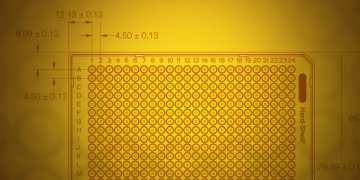
The proprietary warp-free Hard-Shell plates have a reputation as premium plates and were widely used on Bio-Rad, MJ, and Applied Biosystems instruments for the Human Genome Project. Now, researchers can use the same high-quality Hard-Shell plates on Roche LightCycler 480 instruments.
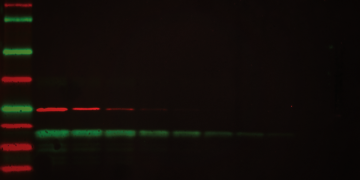
Using Precision Plus Protein™ WesternC™ Standards to Validate Major Steps in the Western Blotting Workflow
Western blotting, although a commonly used technique, involves a time-consuming multi step process. The whole western blotting workflow could take up to three days to complete. Thus, having a tool to monitor each of the major steps in the western blotting workflow reduces chances of finding out at the very end of the workflow that an experiment was not successful.

Bio-Plex® Assay Configurations Simplified with the Bio-Plex Assay Builder for Complete Flexibility
Now you can optimize research expenditure by multiplexing only the targets you need to get the answers you’re seeking. This newly updated tool allows you to choose from within panels to build the perfect kit.

Gel Doc™ EZ Imaging System – A Tale of Speed and Simplicity in Two Cities
The Gel Doc™ EZ imaging system makes an impact from coast to coast — at the Wyss Institute for Biologically Inspired Engineering at Harvard University in Boston, and in the Geoff Rosenfeld Laboratory at the University of California, San Diego.

Simplicity in Imaging: From Conception to Launch
When it comes to gel imaging and blotting, conventional imaging devices have tended to offer either high-performance, complex functionality or low-cost, low-performance simplicity. That is, until now.