
TGX Stain-Free™ Precast Gels
Mini-PROTEAN® TGX Stain-Free™ and Criterion™ TGX Stain-Free™ precast gels, when combined with Bio-Rad’s ChemiDoc™ MP or Gel Doc™ EZ imagers, provide researchers with the fastest protein separation and visualization available using the standard Laemmli system.
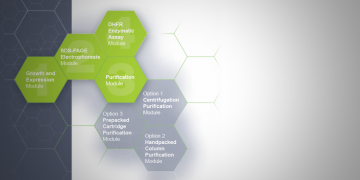
Protein Expression and Purification Series — A Laboratory Course for Training Researchers
Protein Expression and Purification Laboratory Course for Training Researchers on Protein Expression and Purification.
ProteOn™ HTE Sensor Chip
The HTE sensor chip is designed for label-free biomolecular interaction analysis with polyhistidine-tagged proteins. It features a novel tris-NTA (3-NTA) surface for excellent performance of polyhistidine-tagged protein capture, providing high binding stability and regeneracy. It is an ideal choice for the applications of protein-small molecule and other protein interactions requiring high sensitivity.

Stellan Hjertén Wins the California Separations Science Society Award
This year the California Separation Science Society will present its annual Scientific Achievement Award to Professor Stellan Hjertén of Uppsala University. The award dinner will be held November 3, 2011 at the Waterfront Hotel in Jack London Square.
One Array, 36 Unique Protein Interactions
The ProteOn XPR36 protein interaction analysis system was introduced in 2006 to provide a novel array technology to researchers conducting label-free analysis of proteins. The ProteOn system is a high-throughput surface plasmon resonance-based screening tool for a wide range of applications from small-molecule drug discovery to antibody kinetic ranking, epitope binning, and epitope mapping.

ChemiDoc™ MP Imaging System
The ChemiDoc MP imaging system enables stain-free operation and lets you visualize proteins at every stage of your experiment. Its flexibility and sensitivity are complemented by a simple, intuitive operation that integrates seamlessly into your workflow.
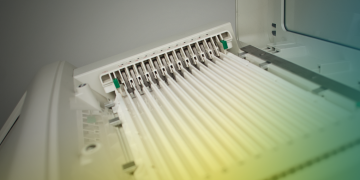
PROTEAN® i12™ IEF System
Introducing Bio-Rad’s PROTEAN i12 IEF system. Each channel in the i12™ focusing tray is powered by its own power supply, enabling precise control over each IPG strip. This makes it possible to run different sample types, different gradients, and multiple protocols all at the same time.
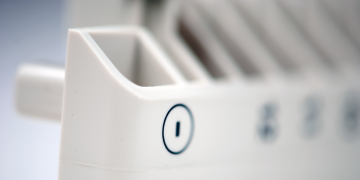
PROTEAN® i12™ IEF System: Independent Voltage and Current Control Enables Optimization of First-Dimension IEF Conditions
This tech report demonstrates the advantages of independently controlled voltage and current parameters for each focusing tray in optimizing IEF conditions for a complex, insoluble membrane protein fraction.
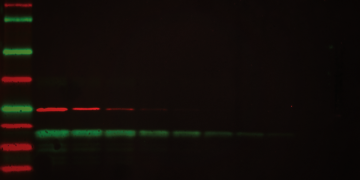
Immun-Blot® LF (Low Fluorescence) PVDF Membranes
Immun-Blot LF (low fluorescence) PVDF membranes are protein blotting membranes optimized for fluorescent and multiplex fluorescent applications. They offer high signal-to-background ratio, low autofluorescence, and superior protein retention to maximize blot detection sensitivity and enable downstream quantitation.
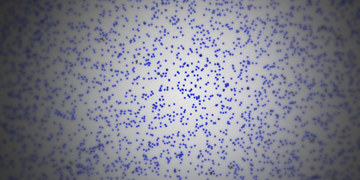
Accurate Counting of Bio-Plex® Magnetic or Polystyrene Beads Using the TC10™ Automated Cell Counter
This report demonstrates that the TC10 automated cell counter is a suitable alternative to the Coulter Counter and hemocytometer for the preparation of custom Bio-Plex assays.