A Resource for Life Science Research

Announcements

Focus on the Biology — Bio-Rad's New Bio-Plex Data Pro™ Software Simplifies Multiplex Data Analysis

Many instruments offer multiplexing capability for biomarker measurements. But to handle and make sense of the huge amount of multiplex data requires sophisticated software like Bio-Plex Data Pro, which simplifies organization, import, sorting and visualization of data, and performing calculations and statistical analyses. Read More

 
Campus Source Reduction Programs Bolster Environmental Savings: Sustainability Part Three

Reducing waste is sovereign for the health of our planet. Source reduction efforts on the Bio-Rad campus are part of an ongoing effort to build green practices into our corporate culture. In honor of Earth Day 2012, various Bio-Rad divisions share green success stories. Read More

 
A New Paradigm for Precise Quantitation of RNA

The new one-step RT-ddPCR kit for probes combines traditional reverse transcription with the new droplet digital PCR technology, so you can get absolute — rather than relative — quantification of your target molecules. Read More

 
New Multiplex Assays for Th17 Cytokine Research

The new Bio-Plex Pro™ human Th17 assays can be used to measure several human target biomarkers that are involved in the T-helper cell type 17 immune response pathway. Read More


In The Field

Novel HRM Assays Expedite Drug Resistance Surveillance for Leprosy Research

Novel HRM Assays Expedite Drug Resistance Surveillance for Leprosy Research

Leprosy is an infectious disease of the skin and nerves caused by Mycobacterium leprae. Resistance to antimicrobial drugs evolves out of genetic mutations in the pathogen. New high resolution melt (HRM) assays — developed in Dr. Vissa's lab with the help of Bio-Rad specialists — offer leprosy researchers a faster, more economical method to survey resistance in drug target genes. Read More

Bio-Plex System in Korea — Seeking to Improve Outcomes for Cancer Patients

Bio-Plex® System in Korea — Seeking to Improve Outcomes for Cancer Patients

"Using the Bio-Plex system allows us to obtain results easily within a short amount of time," says Dr Hunseok Lee of Seoul National University, while explaining why he chose the Bio-Plex system. "Because we measure ten cytokines at a time, the number of plates needed for ELISA experimentation would be ten times more. Summarizing and analyzing these results would be very difficult if not impossible." Read More


Tips and Techniques

Transitioning from Chemiluminescent to Multiplex Fluorescent Blotting: Things to Consider

Today many researchers are switching from chemiluminescence to multiplex fluorescence for western blot detection. Fluorescent detection allows users to multiplex their western blots, enabling simultaneous detection of several target proteins at once, reducing or eliminating the need to strip and re-probe. Here are some considerations while making that transition.

Read More
 
Guidelines for Developing Robust and Reproducible High-Resolution Melt Analysis Assays

High resolution melt (HRM) analysis is the quantitative analysis of the melt curve of a DNA fragment following amplification by PCR requiring only a real-time PCR detection system and HRM-dedicated software. Guidelines are provided to assist with assay design essential for robust and reproducible results.

Read More
 
Using the Precision Plus Protein™ WesternC™ Standard as a QC Tool at Key Steps in the Electrophoresis and Blotting Workflow

Bio-Rad's Precision Plus Protein WesternC standard enables efficient monitoring of all key electrophoresis and blotting steps, allowing quality control checkpoints throughout the workflow. Tips for troubleshooting chemiluminescence blot detection are discussed.

Read More
 

Solutions

Gel Doc EZ Imaging System — A Tale of Speed and Simplicity in Two Cities
Gel Doc™ EZ Imaging System — A Tale of Speed and Simplicity in Two Cities

Two independent research groups discuss how Bio-Rad's Gel Doc EZ imaging system has become an important tool in their research labs. Speed and versatility of imaging and analysis are among the system's most valuable attributes.

Read More
 
Unlocking the Potential of Stem Cell Research Using the EpiQ™ Chromatin Analysis Kit

Researchers in the Schaffer labs at the University of California Berkeley have found the EpiQ chromatin analysis kit to be a novel tool that allows them to rapidly and efficiently study cellular programming of genes important in stem cell function.

Read More
 
Targeting Suppression of B-Cell Lymphoma Proliferation

Faced with challenging electroporation of siRNAs into B cells while retaining cell viability, the Rossi group found Bio-Rad's Gene Pulser MXcell™ system to be a flexible platform that allowed them to perform multi-well analyses and test multiple conditions simultaneously.

Read More
 

Technical Reports

Multiplex Analysis of Inflammatory Markers Using Bio-Plex Pro Human Th17 Cytokine Assays
Multiplex Analysis of Inflammatory Markers Using Bio-Plex Pro™ Human Th17 Cytokine Assays

The T-helper cell (Th17) pathway has been implicated in several autoimmune diseases and in cancer. New magnetic bead–based assays have been developed for several biomarkers in this pathway. The performance characteristics of these assays are evaluated from data on intra- and inter-assay precision, standard curve recovery, cross reactivity, and linearity of dilution. Read More

 
Application of Hexapeptide Libraries for Enhanced Protein Detection in Human Cellular Lysates

Hexapeptide libraries can significantly increase sensitivity of shotgun proteomics analyses of diverse complex samples. Underlying this increased sensitivity is the partial removal of high-abundance proteins leading to an increased representation of low-abundance proteins. Currently, these libraries are mostly used to increase proteomic detection in fluid samples, but not in cellular lysates. This tech report explains how the technology can be extended to cell lysates. Read More

 
Highly Efficient Lipoparticle Capture and SPR Binding Kinetics of a Membrane Protein Using the ProteOn XPR36 Protein Interaction Array System
Highly Efficient Lipoparticle Capture and SPR Binding Kinetics of a Membrane Protein Using the ProteOn™ XPR36 Protein Interaction Array System

Surface plasmon resonance (SPR) is a label-free technique that provides real-time data on the affinity, specificity, and kinetics of biomolecular interactions. Methods describing the use of SPR to study protein-protein interactions of membrane proteins are not readily available. This study describes an efficient method to obtain kinetic analysis of membrane proteins using the ProteOn™ sensor chip after their incorporation into lipoparticles. Read More

 
A MIQE Case Study — Effect of RNA Sample Quality and Reference Gene Stability on Gene Expression Data

This tech report shows how qPCR can lead to erroneous conclusions reagarding differences in MCM7 gene expression between normal and tumor human breast cancer samples if the key steps set out in the MIQE guidelines are not followed. Read More


Product Spotlight

 
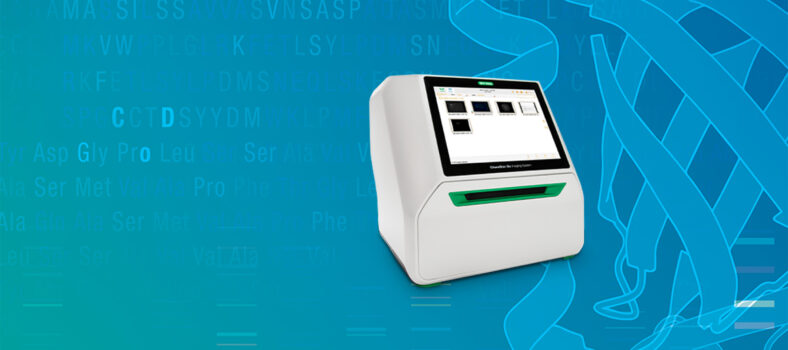
V3 Western Workflow: Learn More