
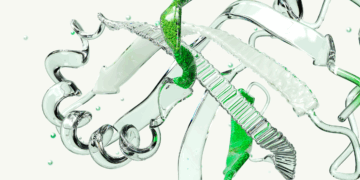
Solving Protein Purification Challenges
Carter Mitchell, PhD, is a protein problem solver. As Chief Science Officer at Kemp Proteins, he helps academic and industry researchers develop a range of protein therapeutics, diagnostics, and molecular tools in milligram to gram quantities with bioprocess scale in mind. In this interview, we discussed how Kemp Proteins ensures delivery of high-quality processes and protein-based products to their clients, even when working with difficult proteins.
A Mixed-Mode Approach — An Alternative to a Three-Step mAb Purification Process
Monoclonal antibody (mAb) purification methods often involve the use of resin-based chromatography. In this video, we compare a three-step mAb purification workflow, which uses Nuvia Ion Exchange Resins post–Protein A capture, to a two-step purification workflow, which includes a Protein A capture step followed by a mixed-mode chromatography step using Nuvia aPrime 4A Resin, a hydrophobic anion exchange resin. We present an additional two-step purification approach using Protein A resin followed by a calcium affinity cation exchange media, CHT Ceramic Hydroxyapatite XT Media. The results of both studies demonstrate that a high purity product can be attained using one fewer unit operation than traditional workflows.
High Performance with GMP Ready CHT Prepacked Process-Scale Columns
Foresight Pro CHT Prepacked Columns are GMP ready for process-scale purification. Learn about the design and see performance data in this webinar.
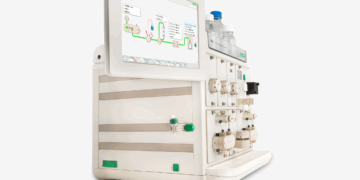
Powering Antibody Production and Purification with the NGC Chromatography System
For this article, we spoke with Vera Dreyfuss of evitria AG, an antibody expression services provider based in Switzerland, about the role that the NGC Chromatography System has played in powering the growth and success of the company.
The Process of Resin Screening
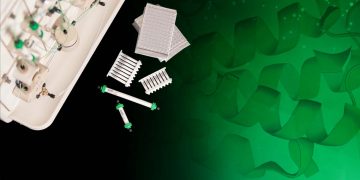
Process development scientists, faced with an increasing number of proteins or complex biomolecules, continuously search for robust purification methods that can be rapidly scaled for manufacturing. What are the optimal purification conditions for high throughput and yield? Which resin or resin combination best purifies the desired protein? How can an efficient, yet cost-effective process be established? The answer: use a systematic screening approach. Read on to learn more.
A Scalable Immobilized Metal Affinity Chromatography Media for Process Purification
Downstream process purification of proteins requires a resin with optimized bead size for ideal pressure/flow properties and decent dynamic binding capacity (DBC) that provides production efficiencies and good process economics. Nuvia IMAC Resin provides the mechanical strength, pore structures, ligand density, and particle size distribution required for an operational run at 300 cm/hr with a DBC of 40 mg/ml at 2 bar column backpressure. Protein purification can efficiently be scaled up from milligrams in the lab to kilograms in bioprocess manufacturing. The chemical stability of Nuvia IMAC Resins ensure efficient column regeneration, reproducibility between purification runs, extended column lifetime, and product purity. Watch our video to learn how Nuvia IMAC Resins overcome the challenges associated with process purification of proteins using metal affinity chromatography.
Two-Step Purification of Low-Expressing Recombinant Exoprotein A Using Mixed-Mode Chromatography
Purifying proteins that are not highly expressed can be challenging. Watch this video to learn about a case study demonstrating an efficient workflow for two-step purification of a low-expressing recombinant protein using mixed-mode chromatography.

Advanced Cancer Therapeutics: Increasing Efficacy and Specificity and Reducing Toxicity
Research into human diseases has led to the development of novel monoclonal antibody drugs. These monoclonal antibody therapies have been successful because of their specificity and selectivity. However, ongoing development and successfully launching a new mAb drug require robust and reliable methods to screen for drug targets, demonstrate drug safety and efficacy, and scale up manufacturing to meet the stringent regulatory guidelines required for approval.

Purification of Untagged Proteins Made Attainable for Any Researcher
High purity protein is a common requirement for biochemical and structural studies. A common approach is to recombinantly express an affinity-tagged version of the protein of interest. However, this is not always a viable option. Here we showcase how the NGC Chromatography System and prepacked chromatography columns can be utilized to develop purification workflows for untagged proteins.
Automate Your Antibody Purification Workflow at Preparative and Analytical Scale
Presented by: Katie Schaefer, PhD, Global Product Manager, Bio-Rad
Peter Winship, PhD, Technical Product Manager, Teledyne Cetac Technologies
View on demand
Purification is a multistep process toward confirmation of a target protein’s purity. In this webinar you will learn how to automate your protein purification workflow by following the creation of a hypothetical monoclonal antibody (mAb). Dr. Schaefer and Dr. Winship expertly demonstrate how the NGC Chromatography System and the AEX-500 series Autosampler work together to maximize screening capability as well as rapidly achieve therapeutic development objectives.