

The ZE5™ Cell Analyzer: Designed by Users for Users
Bio-Rad’s new ZE5 Cell Analyzer is a game-changing cell analyzer that was designed with direct input from scientists and flow core labs. Karen Helm runs the flow core facility at the University of Colorado Cancer Center and was one of the experts consulted. See how ZE5 is helping her flow core users do better science.
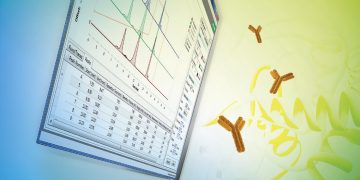
Synthesis and Purification of Recombinant Proteins — A Success Story
Producing highly purified proteins in large quantities is a challenge and requires modification of methods and protocols to attain high efficiency. Dr Murat Kasap from Kocaeli University, Turkey, has overcome these difficulties by taking advantage of the modularity of the NGC Chromatography System and successfully synthesized and purified cardiac troponin-I protein.

Expanding Flow Core Capabilities with the S3e™ Cell Sorter
Andy Riddell, Flow Cytometry Core Facility Manager at the Wellcome Trust- MRC Stem Cell Institutes, is expanding his core facility by allowing his researchers to conduct sorting on their own. In doing so, he is now free to explore and answer the challenging flow cytometry questions that require more of his expert time. Find out how the S3e Cell Sorter has allowed Andy that freedom and how easy sorting can be for researchers.
Expanding Flow Core Capabilities by Shifting Routine Sorts to Self-Sort on the S3e™ Cell Sorter
To run a core flow cytometry lab is no easy task. There is always a balance between running simple sorts and developing new assays for answering complicated questions that demand pushing the limits of existing assays and the limitations of the sorters. See how Andy Riddell, a flow core manager, pushes the limits of his existing assays and how Bio-Rad’s S3e™ cell sorter is allowing him to accomplish that.
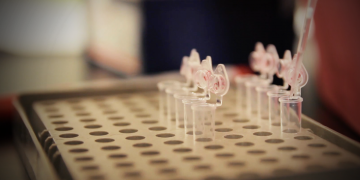
Using PrimePCR™ Gene Expression Assays to Understand Breast Cancer Metastasis
Tumor metastasis is a complex process. It requires the ability of the cancer cells to invade their surroundings and travel to distant sites and survive. Dr. Traci Lyons studies the mechanism of COX-2 functioning in the metastasis of breast cancer cells. Find out how Dr. Lyons used Bio-Rad’s PrimePCR™ Assays to confirm COX-2 knockdown at the mRNA level.
Using PrimePCR™ qPCR Assays to Understand Breast Cancer Metastasis
Traci Lyons describes how PrimePCR Assays ended her laboratory’s struggle to find a qPCR assay that could reliably detect transcription of the cyclooxygenase-2 (Cox-2) gene, which they had identified as potentially prometastatic. Using the PrimePCR Assay for Cox-2, researchers in her lab were finally able to verify cyclooxygenase-2 knockdown, which is a necessary step toward confirming its role in breast cancer metastasis.
High Quality Gene Expression from Precious Samples
— A Simplified Workflow
Obtaining enough starting material to complete multiple gene expression experiments can be challenging when working with precious and limited samples. Find out how Mark Kibschull of the Lunenfeld-Tanenbaum Research Institute in Toronto determines pluripotency and differentiation of limited human embryonic stem cells using Bio-Rad’s SingleShot Cell Lysis Kit, PreAmp Supermix, and PrimePCR validated primer panels. This simplified workflow allows for the gene expression analysis of hundreds of genes from as little as 100 human embryonic stem cells, and without the cumbersome step of isolating and purifying RNA.
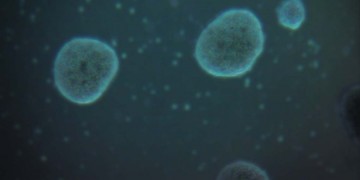
Too Many Questions, Too Little Sample: Developing a Real-Time PCR Workflow for Monitoring Gene Expression in Limited Samples
Traditional real-time PCR workflows often limit the number of genes that can be studied, especially when sample amounts are small. A new workflow now allows Mark Kibschull of the Lunenfeld-Tanenbaum Research Institute in Toronto to track the expression of hundreds of genes using a fraction of the starting material required by traditional methods.
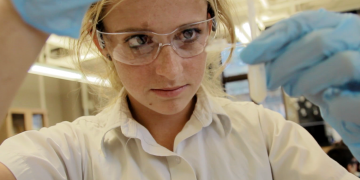
3 Moments of Inquiry with Bio-Rad’s pGLO™ Transformation and Inquiry for AP Biology: A ThINQ! Investigation Kit
“Inquiry-based” is the new buzzphrase in science education. But what do these learning practices look like on the ground? Visit one high school in Southern California and find out about this new approach to teaching science.

Investigating Cancer Stem Cells with the S3™ Cell Sorter
The Cancer Stem Cell model proposes that a special group of dormant cells in the cancer population plays a key role in tumor development and growth, as well as regeneration following treatment. Find out how researchers Stacy Blain and Danielle Joseph are using the S3 Cell Sorter in studying potential cancer stem cells for multiple myeloma.