
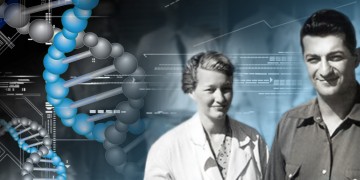
Life Since the Double Helix: 60 Years of Evolution in Biotechnology
The advances in biological science and its applications in medicine, industry, agriculture, and other fields over the past 60 years have changed the world dramatically. This article highlights the major milestones in biology and biotechnology since the discovery of the DNA double helix.
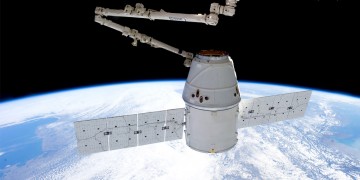
Microbes in Space! High School Students Design Experiments for the International Space Station with Bio-Rad’s pGLO™ Bacterial Transformation Kits
Retired satellite engineer Dan Saldana is helping Valley Christian High School in San Jose, CA build a program to send student experiments to the International Space Station. To study microbial growth in microgravity, Saldana and his students turned to Bio-Rad’s pGLO bacterial transformation kits. Learn about the high-flying travels of these glowing bacteria and the science learning that resulted.

Top Stories of 2013 — Bioradiations Year in Review
From the origins of digital PCR in leukemia research to stopping HIV with novel polymers to better methods for fragment-based drug discovery, BioRadiations has covered some of the most exciting life science research stories of 2013. Now take a look back at these stories and more as we review the best pieces of the year.
Building New Anti-HIV Molecules with Bio-Rad’s ProteOn™ XPR36 System
Can we construct molecules that will interfere with disease pathways? Dan Mitchell of the University of Warwick and his colleagues wanted to apply new synthesis techniques to interrupting HIV infection. Find out what they learned about the potential of these novel molecules using Bio-Rad’s ProteOn™ XPR36 System.
The Chromatography Chronicles Part 5: Chromatography You Can Count On
In biochromatography, every purification or separation procedure that fails because of instrument malfunction wastes precious lab resources. That’s why Bio-Rad, in designing the NGC chromatography system, found new ways to engineer reliability into the chromatography experience. Here’s how they did it.
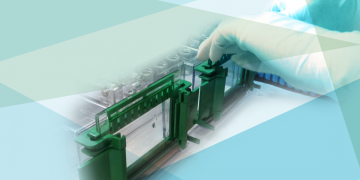
Bio-Rad’s FastCast™ Acrylamide Kits — It’s Time to Expect More from Your Handcast Gels
Hand casting polyacrylamide gels is not an easy task. It is laborious, needs lot of pre-planning and is cumbersome. Bio-Rad’s new TGX and TGX Stain-Free FastCast gel solutions not only address all these issues, but provide added benefits, such as increased speed, stain-free visualization, and quality control. Learn more about these new handcasting kits.
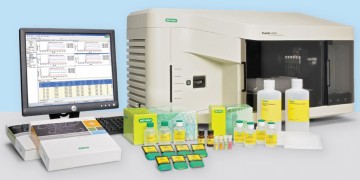
Efficient SPR-Based Fragment Screening and Small Molecule Affinity Analysis Using Bio-Rad’s ProteOn™ XPR36 System
Fragment-based screening has emerged as an important tool for identifying lead compounds in drug discovery, though the molecules involved present challenges related to their low affinity. Label-free surface plasmon resonance (SPR) analysis provides an efficient and reproducible solution to these challenges. Here we describe ways to determine small molecule affinity that combines high sensitivity and high throughput with low sample consumption.
The Chromatography Chronicles Part 4: Chromatography’s Intuitive Side
Chromatography instruments have a bad reputation in terms of their complexity and difficulty of use. In response, Bio-Rad’s designers and engineers challenged themselves to make the new NGC™ chromatography system as simple and intuitive-to-use as possible. Learn about the new easier-to-use instrument interface they created as a result.

Labs for Inspiration: Making a Difference with Bio-Rad’s Science Ambassador Program
Jefferson County, Tennessee, faced tight school budgets and a mandate to “teach to the test” that left little room for hands-on science learning. Learn how biology professor Lisa Eccles worked to reverse this trend by getting involved with the Science Ambassador program, Bio-Rad’s fast-growing initiative to spark excitement about life science in primary school classrooms.
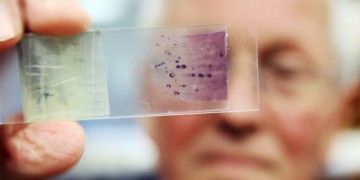
Breaking Leukemia’s Limits of Detection with Droplet Digital PCR
In the early 1990s, researcher Alec Morley and his colleagues pioneered digital PCR techniques to measure acute lymphoblastic leukemia. Today, Morley is trying to develop a more accurate way to quantify chronic myeloid leukemia. Find out why he chose Bio-Rad’s Droplet Digital PCR technology for this effort.