

Effective Strategies for Endotoxin Removal in Therapeutic Protein Purification
Endotoxins are common impurities that pose safety risks in therapeutic protein preparations and are difficult to remove. See proven workflows and strategies.
A Polishing Strategy for Removing Impurities in Bispecific Antibody Purification
Bispecific antibodies pose unique challenges in downstream processing. See how impurities were efficiently removed by mixed-mode chromatography in this webinar.
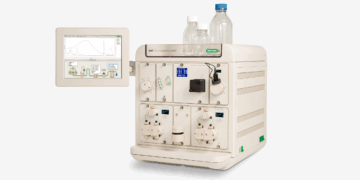
Automated Multicolumn Monoclonal Antibody Purification
The current gold standard in monoclonal antibody purification for most researchers is affinity purification with Protein A or G followed by size exclusion chromatography (SEC). Although robust and highly effective, this workflow does have critical pain points and inefficiencies, leaving researchers to feel that they must oversee every step of their workflow, not leaving their chromatography system unattended for more than a few minutes.

mAb Purification Process Development Using Mixed-Mode Resins — The DOE Approach
In this case study, process chromatography application scientist Artur Stanczak presents a two-step mAb purification workflow, comparing multimodal resin alternatives used for the polishing step that occurs after protein A capture. The design of experiment (DOE) data presented characterizes the behavior of multiple mAbs with two different mixed-mode resins. The importance of scale, prior knowledge, and the stage of development will also be discussed. The results of both mixed-mode resin studies and the different DOE approaches demonstrate the ability to achieve high-purity products.
Unraveling the Mysteries of Molecular Machines
Seychelle M. Vos, PhD, has a passion for science that was ignited at a young age while exploring her parents’ garden and the natural world around her. Now she studies some of the biggest questions in genome biology: how DNA structure and chromatin influence protein transcription. The molecular machines that physically couple transcription and DNA structure by changing the position of nucleosomes, interfacing with chromatin, and compressing DNA into loops, are the focus of Vos’ research.
Efficient and Rapid Purification of E. coli–Expressed Toxin Recombinant Protein Fragments
Tetanus toxoid (TT) is a common carrier protein for conjugate vaccines, but its production is faced with significant challenges. Learn about a purification process that yields over 98% pure target protein in this video.
Next-Generation Chromatography Teaching Labs Set Students Up for Success
Dominique Ingato, PhD, is a faculty member at MiraCosta College’s Department of Biotechnology. As one of only fifteen community colleges in California to offer a bachelor’s degree, MiraCosta College’s bachelor’s program in biomanufacturing is breaking ground. As part of this program, Ingato runs a next-generation chromatography (NGC) teaching lab, where students receive practical, hands-on training using state-of-the-art instruments, such as the NGC Chromatography System.
Assessing Viral Clearance in Early-Phase Process Development
Viral clearance studies are part of a multifaceted approach to ensure biopharmaceutical product safety. To prevent costly changes to a manufacturing process, it is important to assess each operation unit for its efficiency early on during downstream process development. See how a design of experiments (DOE) approach was utilized in this case study to investigate the effect of buffer pH and conductivity on the removal of impurities by an anion exchange (AEX) mixed-mode chromatography resin.
mAb Purification Process Development Using Mixed-Mode Resins — The DOE Approach
This webinar shows a 2-step mAb purification workflow and compares multimodal options for polishing. See how these methods can achieve high-purity products.
Downstream Process Development for the Purification of Biosimilar Insulin from Escherichia coli
This webinar presents a downstream processing workflow for recombinant human insulin production from E. coli. Learn how proinsulin and insulin can be purified.