

Assessing Viral Clearance in Early-Phase Process Development
Viral clearance studies are part of a multifaceted approach to ensure biopharmaceutical product safety. To prevent costly changes to a manufacturing process, it is important to assess each operation unit for its efficiency early on during downstream process development. See how a design of experiments (DOE) approach was utilized in this case study to investigate the effect of buffer pH and conductivity on the removal of impurities by an anion exchange (AEX) mixed-mode chromatography resin.
Scalable Purification Strategies for Viral Vectors and Vaccines
Large-scale downstream processing of viruses can face a range of obstacles different from those of many biotherapeutics. These challenges mostly arise from the size and complexity of the virus, which can affect product purity and recovery. Improvements of purification tools are necessary to overcome these challenges and must be engineered for easy scalability to meet manufacturing demands. In this video, Dr. Mark Snyder discusses common difficulties when developing purification strategies for vaccine production and gene therapy.

Solving Protein Purification Challenges
Carter Mitchell, PhD, is a protein problem solver. As Chief Science Officer at Kemp Proteins, he helps academic and industry researchers develop a range of protein therapeutics, diagnostics, and molecular tools in milligram to gram quantities with bioprocess scale in mind. In this interview, we discussed how Kemp Proteins ensures delivery of high-quality processes and protein-based products to their clients, even when working with difficult proteins.
What You Need to Know About Packing Resins at Process Scale
Learn best practices and guidelines for successfully packing different types of chromatography resins in this video webinar. This includes incompressible resins, like CHT Ceramic Hydroxyapatite Media, as well as traditional compressible resins. In general, parameters such as compression factor, settling rate, and attributes of the base matrix need to be considered when packing resins at process scale. Packing methods can be adapted to obtain simple, highly reproducible packing. Get tips here.
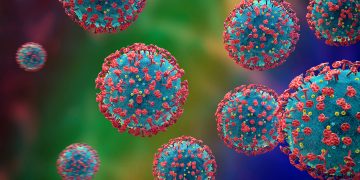
Single-Step Influenza Virus Purification Using an Anion Exchange Resin
A new and simplified anion exchange chromatographic process for the purification of both live and inactivated cell grown H1N1 influenza viruses was established with a recently developed anion exchanger. The resin is designed with an optimized surface extender and pore size for superior accessibility and large biomolecule binding capacity, aiming to overcome common drawbacks of existing ion exchangers for virus purification.
A Mixed-Mode Approach — An Alternative to a Three-Step mAb Purification Process
Monoclonal antibody (mAb) purification methods often involve the use of resin-based chromatography. In this video, we compare a three-step mAb purification workflow, which uses Nuvia Ion Exchange Resins post–Protein A capture, to a two-step purification workflow, which includes a Protein A capture step followed by a mixed-mode chromatography step using Nuvia aPrime 4A Resin, a hydrophobic anion exchange resin. We present an additional two-step purification approach using Protein A resin followed by a calcium affinity cation exchange media, CHT Ceramic Hydroxyapatite XT Media. The results of both studies demonstrate that a high purity product can be attained using one fewer unit operation than traditional workflows.
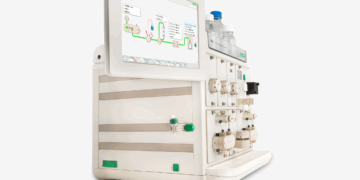
Powering Antibody Production and Purification with the NGC Chromatography System
For this article, we spoke with Vera Dreyfuss of evitria AG, an antibody expression services provider based in Switzerland, about the role that the NGC Chromatography System has played in powering the growth and success of the company.
Manufacturing a Recombinant Retrovirus — Downstream Purification Process Development
Enveloped virus and VLP purification can be difficult. Learn about key factors and a cGMP-compatible, low cost, scalable process for retrovirus vector capture.

The Process of Resin Screening
Process development scientists, faced with an increasing number of proteins or complex biomolecules, continuously search for robust purification methods that can be rapidly scaled for manufacturing. What are the optimal purification conditions for high throughput and yield? Which resin or resin combination best purifies the desired protein? How can an efficient, yet cost-effective process be established? The answer: use a systematic screening approach. Read on to learn more.
A Scalable Immobilized Metal Affinity Chromatography Media for Process Purification
Downstream process purification of proteins requires a resin with optimized bead size for ideal pressure/flow properties and decent dynamic binding capacity (DBC) that provides production efficiencies and good process economics. Nuvia IMAC Resin provides the mechanical strength, pore structures, ligand density, and particle size distribution required for an operational run at 300 cm/hr with a DBC of 40 mg/ml at 2 bar column backpressure. Protein purification can efficiently be scaled up from milligrams in the lab to kilograms in bioprocess manufacturing. The chemical stability of Nuvia IMAC Resins ensure efficient column regeneration, reproducibility between purification runs, extended column lifetime, and product purity. Watch our video to learn how Nuvia IMAC Resins overcome the challenges associated with process purification of proteins using metal affinity chromatography.